
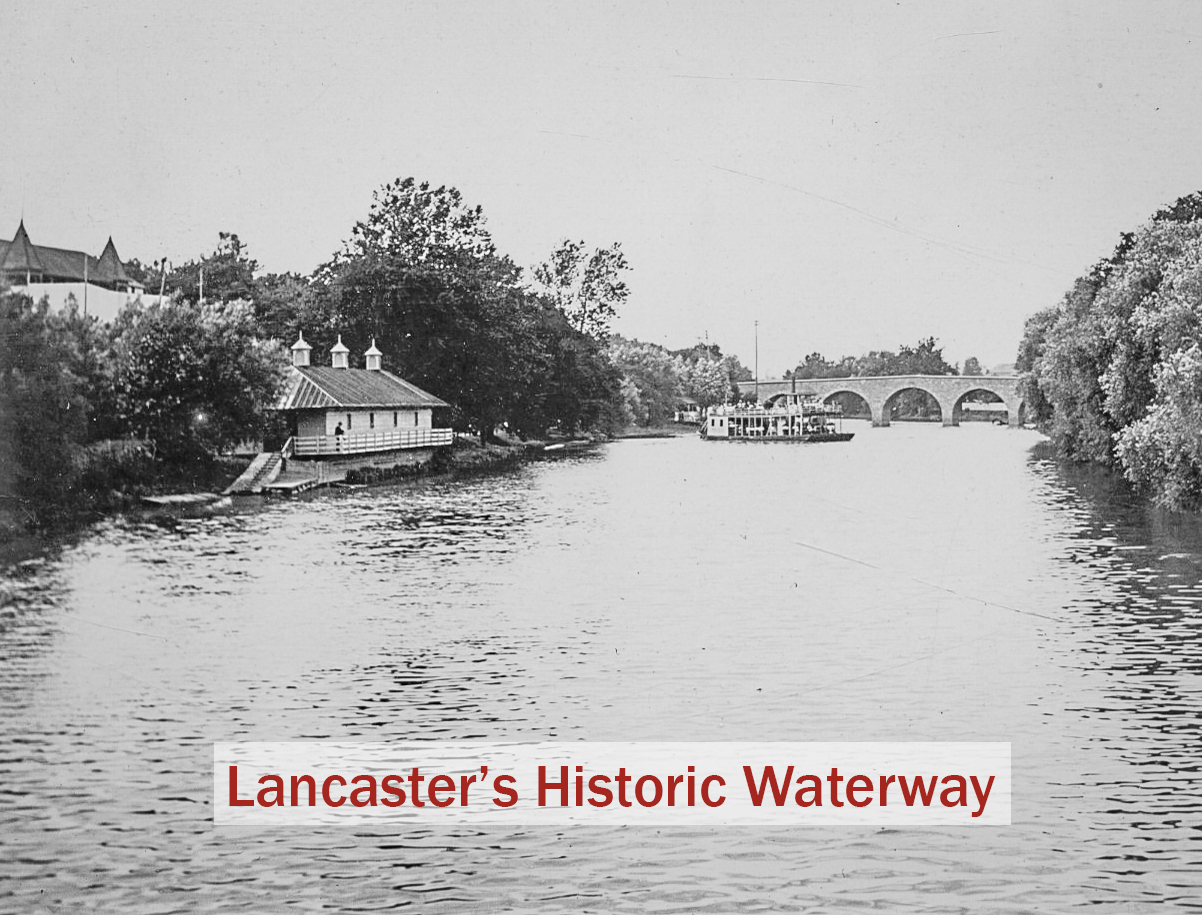
The Conestoga River meanders for sixty miles through the fertile farmlands of Lancaster County. From early Native American inhabitants to the European settlers who made the Conestoga Valley their home, the river has provided sustenance and transportation for generations. Victorian era resorts and hotels were built along the river, providing new recreational activities as steam power drove innovative forms of transportation and waterpower. As the region developed and the population grew, the river paid a heavy price in increased pollution from sewage runoff and industry. Conservation efforts toward the end of the twentieth century through the present day have restored the river’s beauty and recreational reputation.
Here is a collection of five articles about Lancaster’s Historic Waterway, the Conestoga River.
Lancaster’s Historic Waterway – Part I – Introduction to the Conestoga Watershed
Lancaster’s Historic Waterway – Part II – Presettlement Conditions
Lancaster’s Historic Waterway – Part III – Colonial Settlement
Lancaster’s Historic Waterway – Part IV – The Victorian Era
Lancaster’s Historic Waterway – Part V – 20th Century Trials and 21st Century Dreams